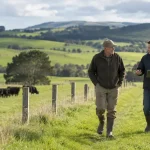

The Customer Experience Farmers Remember Happens Between Sales Calls
A good sales conversation can create a positive impression. But what happens after the rep drives out of the driveway?
Does the sample arrive when promised? Does someone return the farmer’s call? Is a delivery organised when it is needed? If a problem occurs, does the business take responsibility and sort it out?
These are the moments that shape a customer’s experience.
Rural businesses can invest heavily in sales activity, marketing and product development. Yet a customer can still walk away because the service surrounding the product does not meet expectations.
The relationship is not built during the sales call alone. It is reinforced by everything the business does afterwards.
The Sale Is Not the End of the Customer Experience
Winning an order is one part of the relationship. Delivering what the customer expects is another.
Consider a farmer who purchases a product after several conversations with a rural sales rep. The product meets their needs, the price is agreed and the order is placed.
But then the delivery is delayed, nobody communicates the change and the farmer has to chase the supplier for an update.
The original sales conversation may have been excellent. The experience that follows tells a different story.
This is where businesses can lose customer confidence.
Farmers have operations to run. They cannot afford to spend unnecessary time chasing information, following up on commitments or trying to find out who is responsible for resolving an issue.
A supplier who makes those things easier becomes more valuable to the customer.
Good customer service is not an extra benefit added to the product. It is part of what the customer is buying.
Effective Agricultural Sales Training should prepare rural sales reps to understand that their responsibility does not end when a customer places an order. They need to recognise customer expectations, communicate clearly and follow through on their commitments.
Every Promise Creates an Expectation
Rural sales reps make commitments every day.
They promise to send information, check stock availability, arrange a delivery, speak to a technical specialist or come back with an answer.
Each commitment creates an expectation.
The problem is that small promises can easily get lost when reps are managing multiple customers, travelling between farms and dealing with competing priorities.
A missed follow-up might seem minor to the person who made the promise. To the farmer waiting for an answer, it can be frustrating.
The solution is not complicated, but it requires discipline.
- Record commitments as soon as they are made.
- Be clear about when the customer can expect an answer.
- If something changes, communicate before the customer has to chase you.
- Confirm when the task has been completed.
- Never promise something you are not confident you can deliver.
Reliability is demonstrated through the details.
A rep who consistently does what they say they will do gives customers confidence that the business can be trusted.
Don’t Make Customers Chase Your Business
One of the simplest ways to improve the customer experience is to reduce the effort customers have to make to get things done.
Think about how often a farmer might need to contact a supplier to:
- Find out when an order will arrive.
- Get an update on an outstanding enquiry.
- Clarify product information.
- Resolve an invoicing or delivery issue.
- Arrange support for their team.
- Find out who is handling a particular request.
Some of these interactions are unavoidable. The frustration comes when customers have to make repeated calls, explain the same situation to different people or wait without knowing what is happening.
A well-run business should make it clear who is responsible for the next action.
If a rep is waiting for information from another department, the customer should not have to manage that internal process. The rep or the relevant team member should take ownership and keep the customer informed.
The customer does not need to understand your internal structure. They need to know that someone is looking after the issue.
How You Handle Problems Matters
No rural business gets everything right every time.
A delivery can be delayed. A product may not perform as expected. An order can be entered incorrectly. A customer may be unhappy with the service they have received.
The way the business responds can make a significant difference.
When something goes wrong, avoid becoming defensive or immediately looking for someone else to blame.
First, understand what has happened. Listen to the customer, establish the facts and explain what can be done.
Then take action.
A useful response includes:
- Acknowledging the problem without making excuses.
- Establishing what the customer needs to resolve the situation.
- Agreeing on a realistic next step and timeframe.
- Taking responsibility for coordinating the solution.
- Following up to confirm the issue has been addressed.
Do not leave the customer wondering whether anyone is doing anything.
A problem handled well can demonstrate the quality of your business just as clearly as a successful sale. What matters is whether the customer sees accountability, communication and a genuine effort to put things right.
After-Sales Support Should Not Depend on the Next Order
Some businesses are highly attentive while a customer is considering a purchase. Once the order is secured, communication becomes less frequent.
That is a mistake.
Customers should not have to place another order before they receive attention.
A farmer may need help understanding a product, training for their team or advice about getting the best use from what they have purchased. They may also have feedback that could help improve the product or service.
These conversations are valuable.
They help the business understand whether the customer is getting what they expected and whether there are problems that need attention.
A simple after-sales process might include:
- Checking that the product or service arrived as expected.
- Confirming the customer understands any relevant instructions.
- Asking whether the product is meeting their requirements.
- Identifying any additional support the team needs.
- Recording feedback and arranging follow-up where necessary.
This does not mean constantly contacting customers with promotional messages. It means staying connected for a useful reason.
The objective is to make sure the customer receives the value they expected when they made the purchase.
Understanding what customers expect also requires businesses to look beyond individual complaints. Rural marketing research can help identify what farmers value, what influences their decisions and where their experience with suppliers may be falling short.
Make Customer Service a Business Standard, Not an Individual Effort
A rural sales rep can be excellent at building customer relationships, but they cannot compensate indefinitely for poor systems and inconsistent service across the business.
If deliveries are unreliable, customer information is difficult to access or nobody knows who is responsible for resolving an enquiry, the customer experience will suffer.
This is a business-wide responsibility.
Sales managers and business leaders need to establish clear expectations around customer communication, response times, follow-up and accountability.
They should also look at where customers experience unnecessary delays or repeated problems.
Ask your team:
- Which customer requests are regularly delayed?
- Where do customers have to follow up more than once?
- Are commitments being recorded and completed?
- Do customers know who to contact when something goes wrong?
- Are we checking whether customers are satisfied after a purchase?
These questions help identify weaknesses that may not appear in a monthly sales report.
A business can meet its sales target and still create unnecessary frustration for customers. Sales results alone do not tell you everything about the quality of the customer experience.
It is also worth examining whether your business communicates consistently across every customer touchpoint. A communications audit can help identify gaps in messaging, inconsistencies between channels and areas where customers may not be receiving the information they need.
Give Farmers a Reason to Keep Doing Business With You
Farmers have choices. They can compare suppliers, products, pricing and service.
A competitor may offer a similar product. Another supplier may be able to match your price.
What customers also consider is how easy and reliable it is to do business with you.
Do you communicate clearly? Do you keep your commitments? Can customers get help when they need it? Does your team take responsibility when something goes wrong?
These are not small details. They influence whether customers feel confident continuing the relationship.
You do not need an elaborate customer experience programme to start improving things.
Look at the last few customer interactions that required follow-up. Were they handled properly? Did the customer have to chase anyone? Was the outcome communicated clearly?
Start there.
Improving the experience often begins by fixing the everyday problems customers have learned to tolerate.
How Agrarian Can Help
Providing a better customer experience starts with understanding what farmers need, knowing how they perceive your business and making sure your communications and service delivery meet their expectations.
Agrarian helps rural businesses understand their customers and assess how effectively their marketing and communications connect with the market.
If you need a clearer picture of your customers, their expectations and what influences their decisions, explore Agrarian’s Rural Marketing Research.
If your business needs to review how consistently it communicates with customers across its messages and marketing channels, learn more about Agrarian’s Communications Audits and Marketing Assessments.
These services can help identify gaps in your understanding of the market and areas where your communications may need greater clarity and consistency.
A better customer experience starts with understanding what farmers value and making sure your business delivers on what it promises.